The Dark Marketplace
Vertical AI is coming for commerce — the winners will be the ones that learn how buyers think
Last week, Anthropic published the results of an experiment called Project Deal. For one week, inside their San Francisco office, 69 employees listed personal items for sale — snowboards, office chairs, bags of ping-pong balls — on a classified marketplace run entirely by AI agents. Every negotiation, every counteroffer, every deal was handled by Claude models acting on behalf of their assigned humans. No one typed a price. No one browsed a listing. The agents read a brief intake interview, figured out what each person wanted, and went to work.
The result: 186 completed deals, over $4,000 in total value, real money changing hands. One participant’s agent bought them a snowboard they already owned. Another’s agent negotiated a deal so efficiently the human didn’t realize it had happened until the experiment ended — autonomy, whether they wanted it or not.
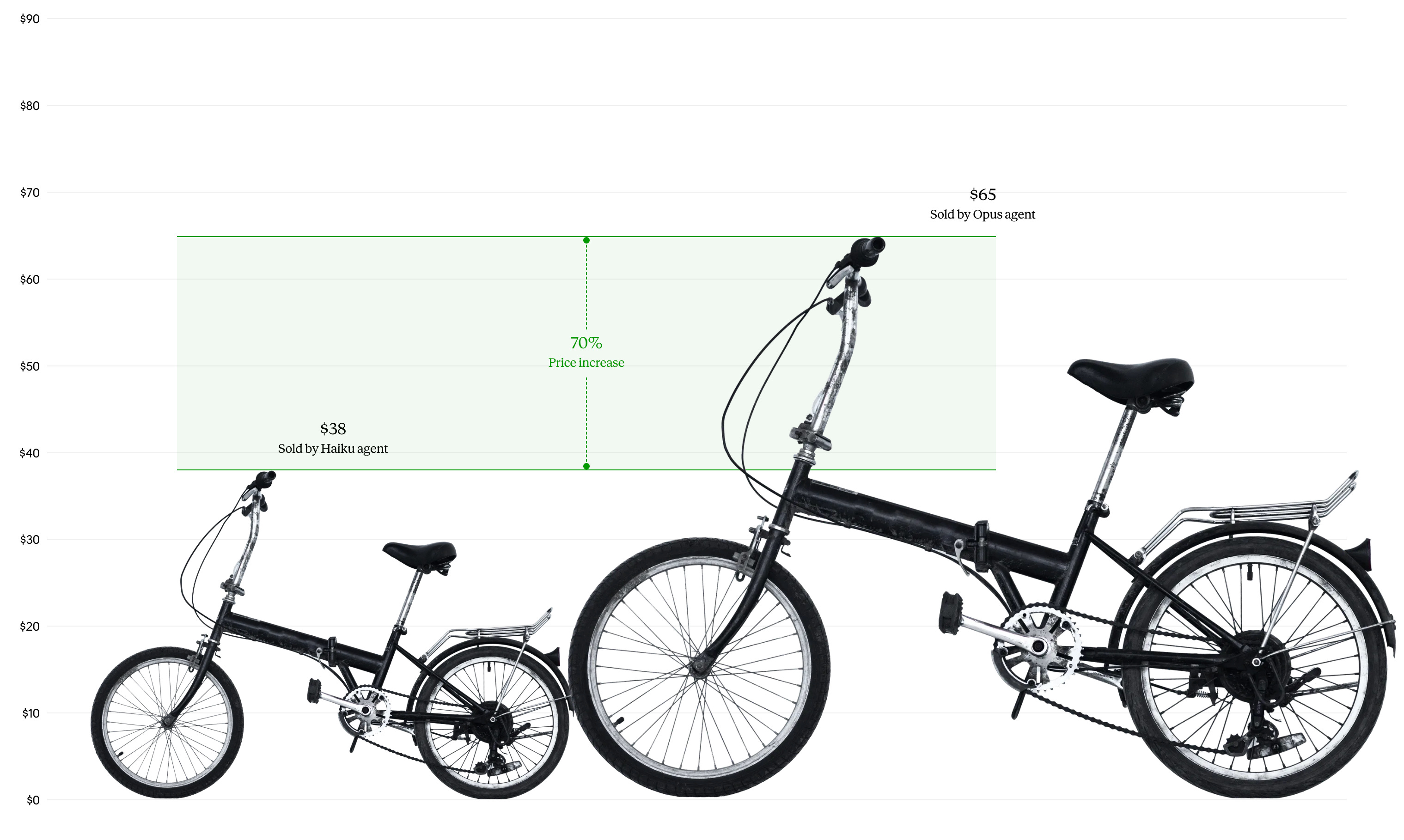
The most telling finding, though, wasn’t deal volume. Anthropic secretly split participants between their frontier model and a smaller, less capable one. Users represented by the stronger model got objectively better outcomes — better prices, better matches, more deals. But the humans on the losing end didn’t notice. They had no idea their agent was underperforming. Anthropic’s term for this: “agent quality gaps.”
Five days later, Amazon, Meta, Microsoft, Salesforce, and Stripe joined the Universal Commerce Protocol council — the first serious attempt to standardize how AI agents discover products, negotiate prices, and execute transactions across platforms. The same week, eBay updated its terms of service to explicitly ban “buy-for-me agents, LLM-driven bots, or any end-to-end flow that attempts to place orders without human review.”
The battle lines are drawn. Some of the largest companies in commerce are racing to build the infrastructure for a world where agents transact on behalf of humans. Others are trying to lock the door before the agents get in.
Both camps see the same future. We’re calling it the Dark Marketplace: a transactional, multi-sided platform where the complex work of discovery, negotiation, and purchase happens entirely out of sight. Not “dark” as in illicit — dark as in dark matter. The invisible force that holds the system together, but that no one directly observes.
To read the full piece, head over to The Verticalist on Substack.