Voice-First Playbooks in Vertical AI
From hot wedge products to the rebirth of software
Conversational voice agents may represent the most significant opportunity in Vertical AI today. While many early voice AI breakouts have focused on speech-to-text transcription use cases (Abridge in medical scribes, Rilla in sales coaching, etc.), we believe the largest long-term opportunities will emerge from conversational, speech-to-speech uses. We are not bearish on transcription by any means. But conversational voice minimizes friction by doubling down on our most natural form of interface and has promise to redefine our relationship with software altogether. As AI whittles away at UI, speech-to-speech will unlock substantial new market opportunities, even if its adoption curve lags behind other generative use cases today.
Quality, trust, and reliability are often cited as the biggest hurdles for conversational voice agents. Common customer complaints stem from performance and reliability issues, including latency, hallucinations, and call dropping. Turn-taking in everyday human conversation is fast. Median latencies in conversational speech are often reported to be under 300ms.1
People love phones—they’re universally accessible and Apple et al have spent decades building an optimized human experience—but they are still imperfect as far as business solutions go. According to a recent Deepgram survey,2 80% of enterprises use some form of voice agent—traditional IVR or newer AI-powered SaaS, mostly. Only 21%, however, are "very satisfied" with them.
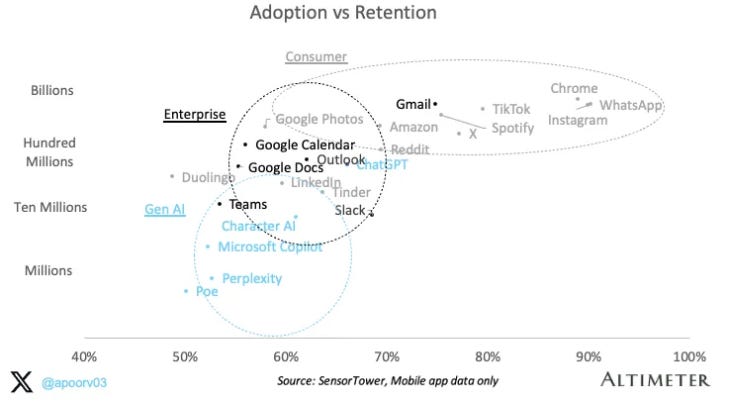
New native voice models have addressed many of these challenges. Initial AI speech-to-text models worked as follows: voice is transcribed into text, the LLM generates a text response, and finally, voice is generated from that response. Each step added delays, voice cues were lost, and performance generally suffered. And while flashy experiences encouraged many buyers to feel the need to try, early Voice AI risked similar churn challenges that mainline consumer AI products have faced.3
Native voice models show substantial progress in handling many of these UX issues. They work with audio directly, allowing them to pick up on pronunciation, speed, tone, and other nuances that are only possible from direct processing. Additionally, newer models have much higher contextual awareness: they can listen and speak simultaneously, retain information from earlier in the conversation on the fly, and interpret the meaning behind spoken words without text reference.
To read the full piece, head over to The Verticalist on Substack.