We Need to Talk about Agents
What GM's $40B mistake can teach Vertical AI founders
The debate about AI and automation often swings between two extremes: excited claims that AI will replace all knowledge workers by the end of the decade, and anxious concerns that enterprise AI pilots are faltering and failing to provide tangible economic value. Both views miss the mark.
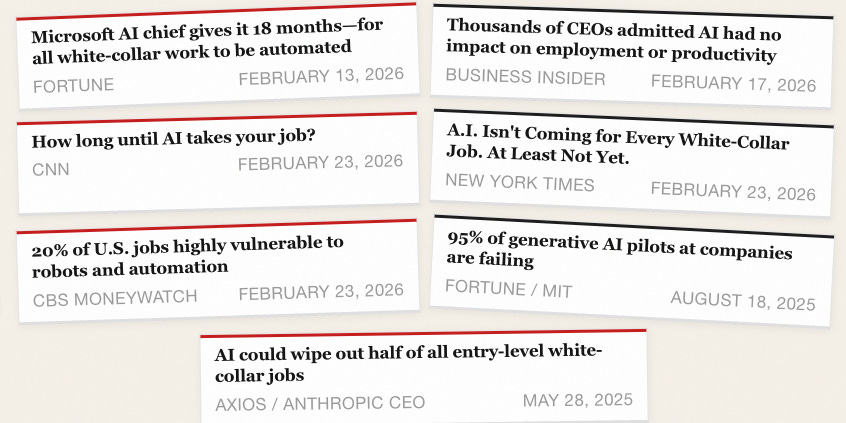
It’s becoming increasingly clear that the picture-perfect “AI replacing workers” story doesn’t add up. Evidence linking AI to hiring slowdowns has been muddled at best, while productivity claims have been hard to measure (some have even been disproved by available data). The “AI-Washing” of job cuts — executives using AI automation to try to flip the negative connotations of layoffs into a positive shareholder narrative — has become pervasive.
None of this means that LLM-era AI isn’t fundamentally transformational, nor that its economic potential is capped. We’re just in the early innings of adoption. It is easy to forget that there was a 20-year gap between the commercialization of the personal computer (by IBM in 1981) and the peak of the digital productivity boom at the turn of the century.1
The single-mindedness of the current AI automation narrative is easy enough to explain: incentives, incentives, incentives. The loudest voices on AI’s labor impact have had the most to gain from speaking up — from the execs running frontier labs to CEOs right-sizing their workforces in the post-2021 era to VCs stirring up hype to justify ever-larger AUMs.
But it’s becoming a problem.
To read the full piece, head over to The Verticalist on Substack.